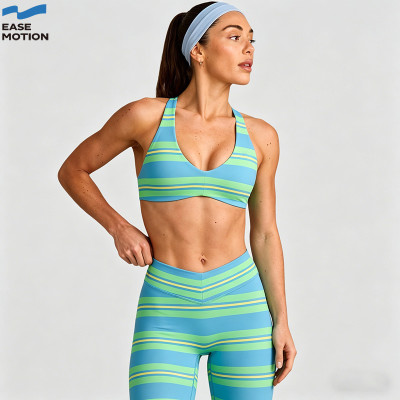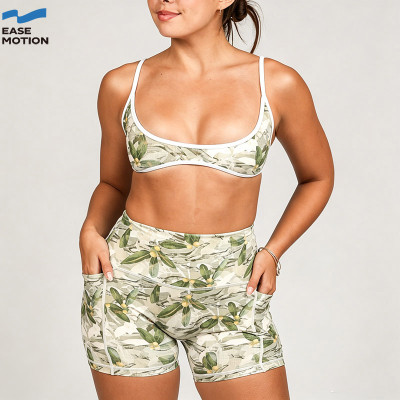
How Startup Brands Find the Right Yoga Apparel OEM/ODM Factory
You’ve nailed the brand identity. Your yoga wear designs speak to a community that values mindfulness, performance, and style. But there’s one decision that can either accelerate your launch or drain your runway: choosing the right OEM/ODM factory. For startup brands especially, the factory isn’t just a supplier—it’s a product development partner, a quality gatekeeper, and sometimes even a silent co-founder.
In this guide, I’ll walk you through a proven process for finding and qualifying yoga apparel manufacturers, and show how a partner like easemotion can help you skip the guesswork and scale with confidence
1. OEM or ODM? Understanding the difference in the yoga wear context
OEM (Original Equipment Manufacturer) produces garments exactly to your tech pack, patterns, and specifications. You control fit, fabric, construction, and trims. This suits brands with strong design DNA and a clear technical file.
ODM (Original Design Manufacturer) offers ready-made collections that you can tweak—change colors, add your logo, adjust minor details. This route dramatically reduces development time and upfront costs, making it ideal for first-time founders testing the market.
In yoga apparel, many factories blend both models. For instance, easemotion runs a dual-track system: a private-label ODM library with on-trend, performance-tested styles, and a fully custom OEM service for brands that need proprietary fits or sustainable materials.
2. Define your non-negotiables before you search
Approaching factories without a clear brief is the fastest way to burn time and money. Start by answering:
- Fabric performance: Do you need buttery-soft Nylon-Spandex with four-way stretch? Moisture-wicking recycled polyester? Cotton-modal blends for low-impact practices?
- Construction: Are flatlock seams, bonded hems, or seamless knitting part of your value proposition?
- MOQ (Minimum Order Quantity): Can the factory support an initial run of 200–500 pieces per style, or do they demand 5,000+?
- Certifications: OEKO-TEX® 100, GOTS, GRS, BSCI, SMETA—which matter to your end consumer?
- Lead times: Can they turn around samples in 7–10 days and bulk production in 4–6 weeks?
Having these answers documented will instantly filter out factories that can’t meet your baseline.
3. Where to find credible yoga apparel factories
The internet is vast, but quality factories don’t always shout the loudest. Use a mix of proactive and reactive discovery:
- Trade shows: ISPO (Munich), Outdoor Retailer (US), Intertextile (Shanghai). Walking a booth and touching fabrics is still the gold standard.
- B2B platforms: Alibaba, Made-in-China, and Global Sources—used wisely. Look for “Verified Supplier,” years in business (>5), and product specialization in activewear/yoga.
- Industry referrals: LinkedIn groups, Facebook communities like “Startup Fashion Brand Network,” or direct intros from fabric mills.
- Google sleuthing: Search terms like “yoga wear OEM factory” + site:*.com often surface smaller, highly specialized manufacturers.
- Production hubs: China (Guangdong, Fujian), Vietnam, Bangladesh, and increasingly Portugal or Turkey for EU nearshoring.
4. The qualification checklist: look for these 7 signals
Once you have a shortlist, scrutinize each candidate with the same rigor you’d apply to a key hire.
a) Yoga apparel specialization
A factory that makes 80% streetwear and “also does leggings” will not understand the nuance of gusset construction, waistband stability, or squat-test opacity. Ask to see their activewear portfolio specifically. easemotion, for example, dedicates 100% of its lines to yoga, Pilates, and studio-to-street pieces, which means pattern makers there live and breathe stretch dynamics.
b) Technical communication
Send a test email with a specific question: “Can you achieve a 28–30 mmHg compression level with a seamless knit and incorporate a hidden pocket in the waistband?” The speed and precision of the reply reveal their technical depth. If the answer is generic, move on.
c) Sampling process and cost
Serious partners charge for samples but often refund if you proceed to bulk. Expect to pay $80–$150 per style for a development sample. Turnaround should be clear. At easemotion, first samples are typically dispatched within 7 working days, with a dedicated project manager updating you at each stage—no silence, no guesswork.
d) Quality control infrastructure
Ask for photos or a live video tour of their QC line. Inline inspection (during production) and pre-shipment AQL (Acceptable Quality Level) checks are non-negotiable. Look for evidence of needle detectors, tension testers, and wash testing protocols.
e) Material traceability
With sustainability now a baseline expectation, factories that can tell you the mill source, yarn origin, and dyeing process build credibility for your brand. Request a fabric certificate pack (OEKO-TEX, GRS) before sampling.
f) Third-party audit reports
Reputable factories willingly share recent social compliance audits (BSCI, SEDEX, WRAP). If they stall or send a scan from 2018, treat it as a red flag.
g) Client references
Speak to at least two existing clients. A question that reveals more than “Are they good?” is: “What was the biggest challenge during your collaboration, and how did they handle it?”
5. Sampling: the make-or-break phase
A sample isn’t just a prototype—it’s a proof of the factory’s ability to interpret your vision. Send a detailed tech pack that includes:
- Flat sketches with stitching details
- Bill of Materials (BOM) with exact fabric composition and weight
- Measurement chart with tolerance (±1 cm typically)
- Reference sample (a physical garment they can dissect)
- Labeling and packaging specs
Insist on a pre-production sample (PP sample) after approvals. This is the exact garment that will roll off the production line. Any deviation here and you have the right to delay shipment until it’s corrected. This discipline prevents expensive batch-level rejections.
During this phase, note how the factory handles feedback. A partner that suggests cost-effective alternatives without compromising quality—like a softer seam tape or a more durable gusset lining—demonstrates the collaborative muscle your brand needs long-term.
6. Contracts, payment terms, and IP protection
Clarify these before cutting a purchase order:
- Intellectual property: Ensure your designs, patterns, and graphics are contractually protected from being shared or sold. A Non-Disclosure, Non-Use Agreement should be signed before you share any CADs.
- Payment terms: 30% deposit / 70% before shipment is common. For new relationships, consider using Alibaba Trade Assurance, PayPal invoicing, or a Letter of Credit for larger orders.
- Liability clauses: Specify who bears the cost if materials arrive late, if quality fails AQL, or if shipping is delayed due to factory fault.
- Incoterms: FOB (Free on Board) is standard; the factory handles up to the port. If you’re new to logistics, FOB with a recommended freight forwarder reduces risk.
7. When growing, switch from transactional to partnership mode
Many startup brands start with the mindset “I need a factory.” But what you truly need is a manufacturing partner—one who invests in your success as their own. This is where the difference between a generic vendor and a focused collaborator like easemotion becomes tangible.
easemotion works exclusively with emerging and scaling yoga/lifestyle brands, which means:
- Low MOQs that match startup cash flow (often as low as 150–300 pieces per style).
- Co-creation support — their in-house design team helps translate mood boards into production-ready tech packs if you don’t yet have technical designers.
- Sustainability at the core — from recycled fishing-net nylon (ECONYL®) to organic cotton blends, they source responsibly and provide full traceability documentation for your marketing story.
- Speed without compromise — a vertically integrated production line reduces hand-offs, so your replenishment orders hit the warehouse 20–30% faster.
- Transparent communication — a single point of contact, weekly progress reports, and honest conversations about what’s achievable within your budget.
For a brand founder, this turns the sourcing nightmare into a strategic advantage. Instead of chasing emails across time zones, you’re unboxing samples that match the Pinterest board you sent three weeks ago.
8. Common mistakes that derail yoga apparel startups
Even seasoned entrepreneurs stumble here. Protect yourself by avoiding:
- Chasing the lowest price: A $3 legging will cost you in returns, bad reviews, and brand damage. Aim for value per wear.
- Ignoring size grading: Activewear sizing is unforgiving. Work with the factory’s grading specialists and always order a full size set sample before bulk.
- Launching too many SKUs: Test 4–6 core styles. Learn what sells, then expand. This keeps MOQs manageable and inventory lean.
- Skipping the factory audit: Remote due diligence (video calls, virtual tours) works, but it must be thorough. Walk through the production line, the finishing station, and the packing area in real-time.
9. Your action plan: from search to first shipment
Here’s a timeline most easemotion clients follow:
Week 1–2: Share brand mood boards, target retail price, and key specs.
Week 3: Receive ODM options or custom tech pack review.
Week 4: Order and approve development samples.
Week 5–6: Sample revisions and PP sample sign-off.
Week 7–10: Bulk production, inline QC, final inspection.
Week 11–12: Shipping and warehouse delivery.
By week 12, you’re holding inventory that reflects your brand’s soul—fabric that moves, seams that hold, and packaging that tells a story.
Conclusion
Finding the right yoga apparel factory is a blend of art, science, and relationship-building. It’s about technical rigor—understanding compression, seam strength, and fiber behavior—and about finding people who genuinely care about your brand’s mission.
When you partner with a specialized team like easemotion, you’re not just outsourcing production; you’re plugging into years of yoga-specific manufacturing expertise, sustainability infrastructure, and a support system designed to get startups to market fast and with minimal risk.
Ready to turn your yoga wear vision into a tangible collection? Explore how easemotion can become your behind-the-scenes production powerhouse—from first sketch to finished garment, with transparency and quality at every seam.
Visit easemotion.com for a free consultation