How to Find a Reliable Yoga Wear Manufacturer in 2026
Quick Answer: How Do You Choose a Reliable Yoga Wear Manufacturer?
A reliable yoga wear manufacturer should offer:
• flexible MOQ for market testing
• strong product development capability
• stable fabric sourcing
• transparent sampling and delivery timelines
• measurable quality control systems
• responsive communication
• long-term production scalability
If a supplier cannot clearly explain these seven areas, the sourcing risk usually increases.
Why Choosing the Right Yoga Wear Factory Matters in 2026
“My sample looked perfect, but the bulk order was completely different.”
“They promised 30 days. It took almost two months.”
“The fabric suddenly went out of stock and we had to change materials.”
For many emerging activewear brands, these situations are familiar.
A yoga wear manufacturer does more than produce garments. They directly affect:
• launch speed
• cash flow efficiency
• product consistency
• customer satisfaction
• brand reputation
As the global yoga apparel market continues to grow in 2026, the challenge is no longer finding a factory—it is finding the right manufacturing partner.
This guide explains how to evaluate suppliers before placing your first order.
7 Criteria to Evaluate a Yoga Wear Manufacturer
1. Minimum Order Quantity (MOQ): Can They Support Small-Batch Launches?
MOQ is often the first major barrier for new brands.
Many large factories focus on mature customers and require 500–1000 pieces per color per style. That structure may not fit a new label testing market demand.
A more suitable partner often provides flexible trial production, allowing lower-risk market validation.
What good looks like
• 100–200 pieces per style or color
• phased production options
• replenishment capability for successful products
Red flag
If a factory pushes large commitments before understanding your stage of business, flexibility may be limited later.
Smart sourcing question
“If I want to test the market with 100–200 units first, what production approach would you recommend?”
Their answer often reveals whether they think like a supplier—or a partner.
2. Product Development Capability: Can They Turn Ideas Into Production?
A professional yoga wear factory should do more than execute sewing.
They should help translate concepts into manufacturable products.
Fabric capability
Ask whether they can provide:
• brushed soft-touch fabrics
• high-compression performance fabrics
• four-way stretch constructions
• moisture-wicking and breathable materials
• recycled nylon or recycled polyester options
Development support
If you only have references, sketches, or inspiration boards, can they help build:
• technical packs
• measurement specifications
• construction recommendations
• production-ready development files
Production techniques
Can they support multiple branding and construction methods?
Examples include:
• heat transfer
• digital printing
• embroidery
• embossed logos
• bonded seams
• seamless construction
Factories with integrated development reduce coordination risk and speed up launch.
3. Sampling and Lead Time: Speed Shapes Market Opportunity
In activewear, timing affects competitiveness.
Missing a launch window can mean losing momentum, campaign timing, or seasonal relevance.
Typical sampling timeline
A professional manufacturer usually delivers development samples within 7–14 working days.
Typical bulk timeline
Bulk production should be linked to:
• sample approval
• fabric readiness
• trim availability
• production scheduling
Good operational sign
Reliable suppliers usually provide:
• milestone updates
• production calendars
• proactive communication during manufacturing
The earlier a supplier communicates risk, the easier it is to solve.
4. Quality Control: Ask for Systems, Not Promises
Most factories say they have good quality.
The real question is how quality is controlled.
A mature quality management process usually includes three layers.
Incoming material inspection
Checks before production begins:
• fabric weight
• stretch recovery
• shrinkage
• color consistency
• surface defects
In-line production inspection
Quality checks during sewing and construction—not only at the end.
Final random inspection
Many professional suppliers apply AQL 2.5 standards for finished goods.
Helpful question
Ask:
“What is your typical finished goods acceptance rate?”
Factories that measure performance usually manage quality more systematically.
5. Supplier Credibility: Verify Before You Commit
Trust should be validated, not assumed.
Certifications worth checking
• ISO 9001
• OEKO-TEX Standard 100
• recycled material certifications if sustainability matters
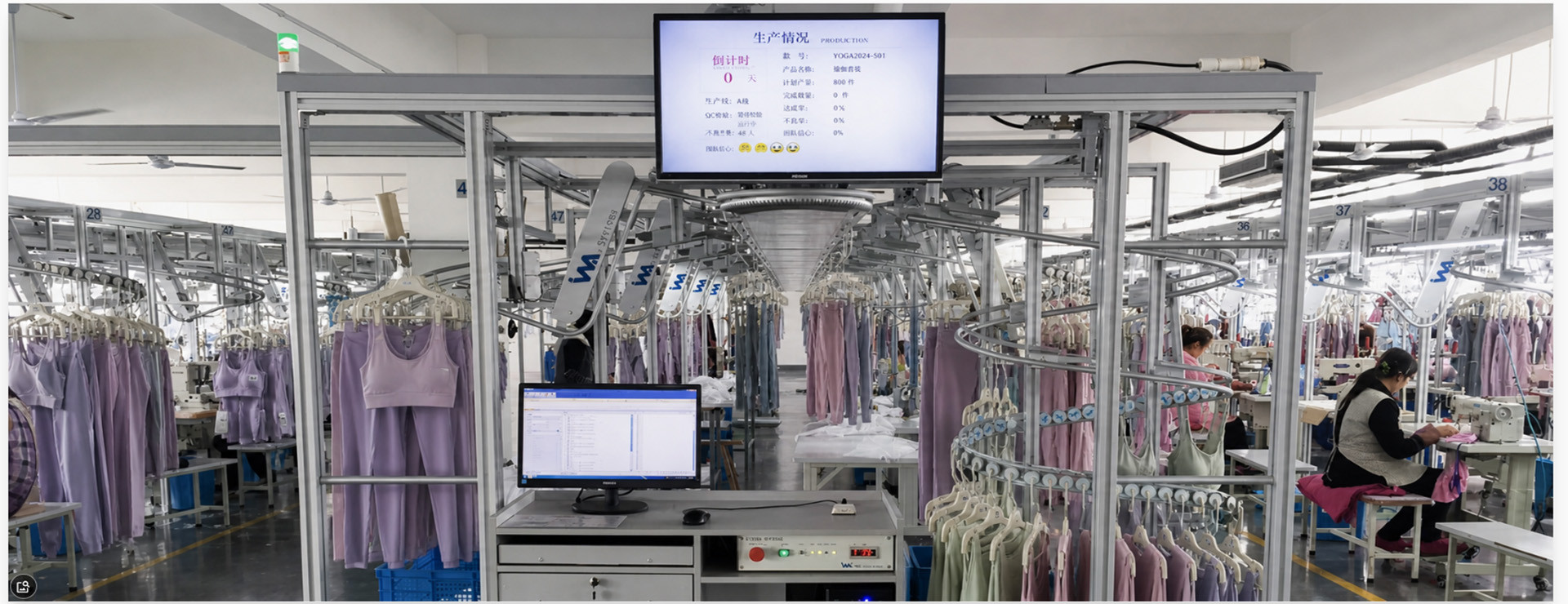
Live video factory walkthrough
Ask to see:
• cutting department
• sewing lines
• warehouse organization
• inspection procedures
Live production visibility often reveals more than marketing photos.
Client and market experience
Useful questions include:
• Which regions do you serve?
• Do you mainly support startups or large brands?
• What product categories are your strongest?
Experience often predicts execution quality.
6. Communication Quality: Early Behavior Predicts Future Cooperation
Communication problems rarely start during production. They usually appear at first contact.
Response speed
A practical benchmark is within 24–48 hours.
Quality of communication
Good suppliers often ask:
• What is your target market?
• What size range do you need?
• What packaging format do you require?
• What branding details are important?
Thoughtful questions usually indicate stronger operational understanding.
7. Beware of the Lowest Price
Low prices can look attractive.
They can also hide production risk.
Common hidden costs
• inconsistent fabrics
• weak sewing execution
• unstable delivery schedules
• unexpected extra charges
• higher communication friction
Better sourcing logic
Do not ask only:
“Who offers the lowest unit price?”
Ask instead:
“Who offers the best total production value?”
That includes:
• quality consistency
• speed
• communication efficiency
• lower operational risk
• better scalability
Common Red Flags When Evaluating a Yoga Wear Factory
Be cautious if a supplier:
• avoids detailed production questions
• cannot explain quality control processes
• provides vague lead times
• changes prices frequently
• refuses live factory visibility
• only focuses on low price
• responds slowly before the order is placed
Early warning signs usually become larger problems later.
Quick Supplier Evaluation Checklist
Before choosing a factory, confirm these seven points.
| Evaluation Area | Key Question |
| MOQ | Can they support market testing? |
| Development | Can they convert ideas into production-ready products? |
| Fabric sourcing | Are material options stable and suitable? |
Sampling | Are timelines clearly defined? |
Quality control | Is there a measurable inspection system? |
Communication | Are responses fast and practical? |
Scalability | Can they support future growth? |
Why Flexible Supply Chains Matter for Emerging Brands
For growing activewear brands, the best manufacturer is not always the largest one.
The most valuable partner often combines:
• flexibility
• development support
• transparency
• reliable execution
• scalable production capability
A flexible supply chain helps brands launch faster while reducing operational risk.
How Easemotion Supports Growing Yoga and Activewear Brands
At Easemotion, we work with startups, studios, and growing activewear brands that need flexibility without sacrificing production standards.
We support:
• low MOQ from 100 pieces
• custom yoga leggings, sports bras, shorts, tops, and matching sets
• fabric sourcing and material recommendations
• OEM / ODM product development
• 7–14 day sample development
• systematic quality control
• transparent production communication
Our goal is simple: help brands launch with greater confidence and fewer supply chain surprises.
Final Thoughts
In 2026, choosing a yoga wear manufacturer is not only a sourcing decision.
It is a growth decision.
The right manufacturing partner helps reduce costly mistakes, improve launch speed, and strengthen long-term brand trust.
When evaluating suppliers, start with clear questions, measurable standards, and transparent conversations.
That usually leads to better results.
FAQ
What is a good MOQ for a startup yoga wear brand?
For early-stage brands, 100–200 pieces per style or color is often a practical starting point for testing market demand.
How long does yoga wear sampling usually take?
Most professional manufacturers require 7–14 working days, depending on fabric availability and design complexity.
What certifications should a yoga apparel manufacturer have?
Common indicators include ISO 9001, OEKO-TEX Standard 100, and recycled material certifications if sustainability is relevant.
How can I tell if a factory is reliable?
Look for transparent communication, clear production timelines, measurable quality systems, and willingness to provide real factory visibility.