How to Start a Yoga Clothing Line: A Comprehensive Guide for New Entrepreneurs
The burgeoning yoga industry presents a unique and lucrative opportunity for entrepreneurs seeking to establish a clothing line. This comprehensive guide is tailored for new ventures, offering strategic insights into navigating market entry and sustained growth. Understanding the intricate steps from conceptualization to market realization is paramount for success. This outline details the critical processes involved in establishing a thriving yoga apparel brand, focusing on strategic planning and execution.

Defining Your Niche and Identity: How to Start a Yoga Clothing Line with easemotion
Before a single stitch is sewn or a design is sketched, the foundational step in launching a successful yoga clothing line is defining your brand’s niche and identity. This initial phase is not merely about creating attractive apparel; it's about carving out a specific space in a crowded market, building a story that resonates with a target audience, and establishing a unique value proposition that sets you apart. With a partner like easemotion, you can bring this unique vision to life with greater ease.
The Criticality of Niche Selection in Apparel Venturing
In the vast and competitive world of fashion, attempting to appeal to everyone often results in appealing to no one. Niche selection is the strategic process of identifying a small, specific, and well-defined segment of the market to focus on. For a new yoga clothing line, this is arguably the most critical strategic decision you'll make. A well-chosen niche provides a clear direction for your product design, branding, and marketing efforts, allowing you to concentrate your resources effectively.
Choosing a niche helps to reduce the level of direct competition. Instead of going head-to-head with established giants like Lululemon or Athleta, you can become a dominant player within a smaller, dedicated sub-market. This targeted approach allows your brand to develop a deeper connection with customers who feel that your products are specifically designed for their unique needs and values. For example, a brand focusing on sustainable and eco-friendly yoga wear for environmentally conscious practitioners will attract a loyal following that a more generic brand cannot. This focus builds authenticity and brand loyalty, which are invaluable assets for any new venture.
Identifying Profitable Yoga Apparel Sub-Niches and Themes
The yoga apparel market is far from monolithic. It's a vibrant landscape comprised of numerous sub-niches, each with its own dedicated community and specific needs. Identifying a profitable niche involves researching market trends and understanding the diverse motivations of yoga practitioners. Here are some potential sub-niches to explore:
- Sustainability and Eco-Consciousness: This is a rapidly growing segment. Consumers are increasingly aware of the environmental impact of fashion and are seeking out brands that use organic cotton, recycled polyester, bamboo, or other sustainable materials. This niche extends beyond materials to include ethical manufacturing processes and eco-friendly packaging.
- Luxury and High-Performance: Targeting serious yogis and fitness enthusiasts, this niche focuses on premium, high-tech fabrics that offer superior moisture-wicking, four-way stretch, and compression. The branding would emphasize performance, durability, and sophisticated design.
- Inclusive and Adaptive Sizing: The demand for high-quality, stylish yoga wear that caters to all body types is significant. Brands that offer a wide range of sizes, including petite, tall, and plus-size options, can build a very loyal community by promoting body positivity and inclusivity.
- Maternity Yoga Wear: Pregnant women often turn to yoga for comfort and exercise. Designing comfortable, supportive, and adaptable clothing for prenatal and postnatal yoga is a highly specific but a very needed niche.
- Themed and Expressive Designs: Some consumers look for yoga wear that expresses their personality. This can include spiritual or bohemian themes, bold and artistic prints, or minimalist and chic aesthetics.
The key is to find a niche that is not only profitable but also aligns with your personal passion and brand vision.
Crafting Unique and Appealing Designs for the Yoga Enthusiast
Once you've identified your niche, the design process begins. Your designs are the tangible expression of your brand's identity. They must be both aesthetically pleasing and highly functional for the yoga practitioner.
Functionality First: Yoga involves a wide range of movements, including deep bends, stretches, and inversions. Therefore, the fit and construction of the clothing are paramount.
- Fabric Choice: The material must be breathable, moisture-wicking, and offer excellent stretch and recovery. Popular choices include blends of spandex, nylon, and polyester. For a sustainable niche, organic cotton, TENCEL™, and fabrics made from recycled materials are excellent options.
- Construction: Flatlock seams are crucial to prevent chafing during movement. A gusseted crotch in leggings provides greater range of motion and durability. High, supportive waistbands that don't roll down are a must-have for leggings.
- Fit: Your designs must accommodate the dynamic nature of yoga without restricting movement or becoming transparent when stretched.
Aesthetic Appeal: Within your chosen niche, your designs should be unique and compelling. This could be through:
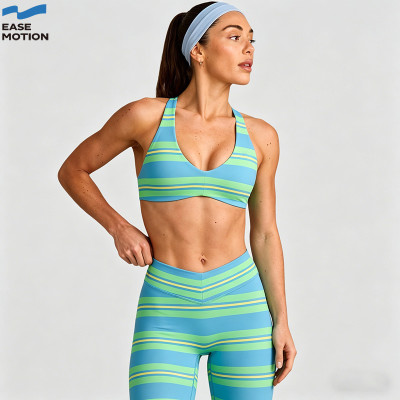
- Color Palette: Develop a signature color palette that reflects your brand's mood—be it earthy and natural, bright and energetic, or calm and muted.
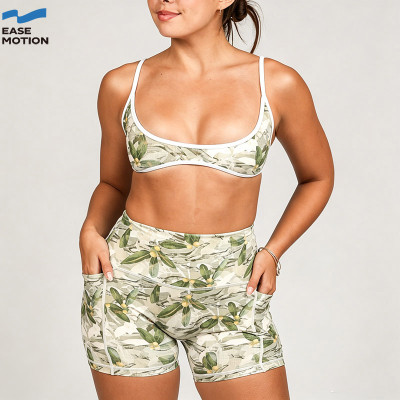
- Prints and Patterns: Custom prints can make your brand instantly recognizable. These could be inspired by nature, mandalas, abstract art, or geometric shapes.
- Subtle Details: Small details like a unique logo placement, a contrasting seam, a mesh insert, or a distinctive strap design on a sports bra can elevate a simple piece into a signature item.
Your design philosophy should consistently reinforce your brand's core message, ensuring every piece tells a part of your story.
Understanding Popular Use Cases and Application Scenarios for Yoga Apparel
Yoga apparel has transcended the studio and become a staple of modern wardrobes, largely due to the rise of the "athleisure" trend. Understanding how and where your target customers will wear your clothing is essential for designing versatile and desirable products.
| Use Case | Key Design Considerations | Target Customer |
|---|---|---|
| Intensive Yoga Practice (Hot Yoga, Vinyasa) | Maximum breathability, superior moisture-wicking, lightweight fabrics, secure fit that stays in place. | Dedicated yogis, fitness enthusiasts. |
| Restorative & Gentle Yoga (Yin, Hatha) | Supreme comfort, soft and cozy fabrics, looser fits, minimal compression. | Practitioners seeking relaxation and comfort. |
| Studio-to-Street (Athleisure) | Stylish and versatile designs, functional pockets, fashionable silhouettes, fabrics that drape well. | The modern consumer who values both style and comfort. |
| Outdoor Activities (Hiking, Running) | Durability, UV protection in fabrics, pockets for essentials, and potentially weather-resistant properties. | The active individual who enjoys a variety of outdoor pursuits. |
By considering these diverse application scenarios, you can design a collection that meets the multidimensional needs of your customers. A pair of leggings might need to perform flawlessly during a challenging yoga class but also look chic when paired with a sweater for brunch. Brands that successfully navigate this intersection of performance and lifestyle are positioned for significant growth in the contemporary apparel market.
Validating Your Vision: How to Start a Yoga Clothing Line Through In--Depth Market Research
Once you have a compelling brand identity and a niche focus, the next critical phase is to validate your ideas through rigorous market research. This process is about replacing assumptions with data, ensuring that your vision aligns with real-world market demand and that you have a clear understanding of the competitive landscape. Skipping this step is a common and costly mistake; robust research is the foundation upon which a durable business is built.
Uncovering Industry Trends and Emerging Design Themes
The activewear market is dynamic, with trends and consumer preferences constantly evolving. Staying ahead of the curve is essential for creating a brand that feels fresh and relevant. Your research should focus on both macro and micro trends.
Macro Trends: These are large-scale shifts that affect the entire industry.
- Sustainability: As mentioned, this is no longer a niche concern but a major market force. Research should delve into specific sustainable materials, circular economy models (like clothing recycling programs), and transparency in supply chains, which consumers are increasingly demanding.
- Technological Integration: This includes innovations in fabric technology—such as infrared fabrics that claim to aid recovery, anti-odor treatments, and UV-protective textiles. It also extends to "smart clothing" with embedded sensors, although this is more nascent in the yoga space.
- Inclusivity and Authenticity: Brands are moving beyond tokenism to genuinely embrace diversity in their sizing, marketing, and model representation. Your research should analyze how successful brands are implementing this authentically.
Micro Trends: These are more specific design and aesthetic themes.
- Color Palettes: Look at fashion forecasting services (like WGSN or Pantone), influential blogs, and social media to identify upcoming color trends for the season you plan to launch in.
- Silhouettes and Details: Are one-shoulder sports bras gaining traction? Are flared leggings (or "yoga pants") making a comeback? Are cut-outs, mesh panels, or ribbed textures popular?
- Print and Pattern Directions: Research emerging pattern trends. Are animal prints evolving? Are abstract botanicals replacing traditional florals? Is there a move towards digital or psychedelic prints?
Following fashion influencers, yoga teachers, and competitor brands on platforms like Instagram and Pinterest can provide a real-time visual stream of what's currently trending and what's on the horizon.
Evaluating Market Demand, Competitive Landscape, and Optimal Pricing Strategies
Data-driven evaluation is key to positioning your brand for profitability. This involves three core components:
1. Market Demand: You need to confirm that there are enough people interested in your specific niche to build a sustainable business.
- Keyword Research: Use tools like Google Keyword Planner or Ahrefs to gauge the search volume for terms related to your niche (e.g., "plus size sustainable yoga wear," "men's yoga shorts with pockets"). High search volume indicates existing demand.
- Social Media Analysis: Look at the size and engagement of communities related to your niche. Are there active Facebook groups, subreddits, or hashtags dedicated to your target audience?
- Trend Analysis: Use Google Trends to see if interest in your niche is growing, declining, or stable over time.
2. Competitive Landscape: It's highly unlikely you'll find a niche with zero competition. The goal is to understand who your competitors are and how you can differentiate your brand. Create a competitor analysis spreadsheet and track:
- Direct Competitors: Brands targeting the exact same niche.
- Indirect Competitors: Brands targeting a broader yoga audience but whose products might appeal to your customers.
- For each competitor, analyze: Their product range, pricing, brand messaging, marketing channels, and perceived strengths and weaknesses. Look for gaps in the market. Maybe your competitors offer great designs but lack inclusive sizing, or their pricing is prohibitive for a certain segment of the market. This is where your opportunity lies.
3. Optimal Pricing Strategies: Pricing is both an art and a science. It needs to cover your costs, be perceived as fair by your customers, and align with your brand's positioning.
- Cost-Plus Pricing: Calculate your total cost per item (materials, manufacturing, shipping, marketing) and add a markup percentage to determine your selling price. This ensures profitability on each item sold.
- Value-Based Pricing: Price your products based on the perceived value to the customer. A luxury brand using premium, technologically advanced fabrics can command a higher price than a brand focused on basic essentials.
- Competitive Pricing: Analyze your competitors' pricing. You might choose to price your products slightly above, below, or in line with theirs, depending on your brand's value proposition. Pricing significantly lower might signal lower quality, while pricing too high without a clear justification can deter customers.
A balanced approach, considering costs, perceived value, and the competitive landscape, will help you find the sweet spot for your pricing strategy.

Harnessing Online Communities and Forums for Audience Insights
Online communities are a goldmine of candid, unfiltered customer feedback and insights. They allow you to listen in on real conversations your target audience is having about their needs, wants, and frustrations with current yoga apparel options.
- Reddit: Subreddits like r/yoga, r/femalefashionadvice, or even niche-specific forums are invaluable. Search for terms like "yoga pants," "sports bra," or "looking for" to find threads where users are discussing products. They will openly share what they love and hate: which leggings are squat-proof, which brands pill after one wash, and what features they wish existed.
- Facebook Groups: Search for groups dedicated to yoga, specific yoga styles, or broader topics like "sustainable fashion" or "plus-size fitness." Joining these groups allows you to observe conversations and even ask questions (if group rules permit) to poll members about their preferences.
- Product Reviews: Go to the websites of your competitors and meticulously read their product reviews, especially the 3-star and 4-star ones. These often contain the most constructive feedback, highlighting minor flaws or desired improvements that you can incorporate into your own designs.
Engaging with these communities is not about overtly selling your product. It's about deep listening and learning the language of your target customer. What "pain points" do they have? What do they value most? These qualitative insights are just as important as quantitative market data.
easemotion's Framework for Robust Product Idea Validation and Refinement
Before committing to a large inventory, you need to validate your specific product ideas. This is a lean approach to minimize risk. A robust validation framework, such as the one championed by platforms like easemotion, often includes the following steps:
- Create a Minimum Viable Product (MVP): In the apparel world, an MVP doesn't have to be a physical product at first. It can be a high-quality digital mockup or a 3D render of your design. The goal is to create a realistic representation of your product that you can test.
- Develop a Landing Page: Create a simple, single-page website that showcases your MVP. This page should have compelling product descriptions, professional mockups, and a clear call-to-action (CTA).
- Drive Targeted Traffic: Use small, targeted ad campaigns on platforms like Instagram or Facebook to drive traffic from your specific niche to the landing page.
- Gauge Purchase Intent: The CTA on your landing page shouldn't be "Buy Now" (since the product doesn't exist yet). Instead, use a CTA like "Pre-Order Now" or "Get Notified When We Launch." The number of people who click this button and provide their email address is a strong indicator of purchase intent.
- Gather Feedback: Include an optional short survey for those who sign up, asking what they like about the product and what their biggest hesitation might be (e.g., price, color options, fabric concerns).
- Analyze and Iterate: Based on the conversion rate of your landing page and the feedback you receive, you can make an informed decision. If there's strong interest, you can proceed with confidence. If interest is lukewarm, the feedback will provide valuable insights on how to pivot or refine your design before investing in production.
This data-driven validation process transforms product development from a gamble into a calculated, strategic process, ensuring that what you finally launch is something the market truly wants.
Launching with Agility: How to Start a Yoga Clothing Line Using a Print-on-Demand Model
For new entrepreneurs entering the competitive apparel market, the traditional business model—which involves high upfront investment in inventory, warehousing, and logistics—can be prohibitively risky. An agile and increasingly popular alternative is the Print-on-Demand (POD) model. This approach allows you to launch your yoga clothing line with minimal financial risk and maximum flexibility, making it an ideal strategy for validating your brand and designs in a real-world setting.
The Strategic Benefits of Print-on-Demand for New Entrepreneurial Ventures
The Print-on-Demand model is revolutionary for startups. Instead of buying hundreds or thousands of units of each design upfront, you partner with a POD supplier who handles inventory, printing, and shipping on your behalf. A product is only created after a customer has placed and paid for an order on your online store. This workflow offers several powerful strategic advantages:
- Minimal Financial Risk: This is the most significant benefit. With no need to purchase inventory in bulk, your startup costs are drastically reduced. You don't have to worry about dead stock—un-sold clothing that ties up capital and ends up in a landfill. This frees up your budget to be invested in what truly matters at the beginning: design and marketing.
- Unlimited Creative Freedom: POD allows you to experiment with a vast range of designs without any financial penalty. You can offer dozens, or even hundreds, of different prints, colors, and styles in your store. This is impossible with a traditional model. You can test which designs resonate most with your audience and double down on the winners without having a warehouse full of the losers.
- Reduced Operational Complexity: A POD partner handles the entire fulfillment process. This includes storing the blank garments, printing your design on them, packing the order, and shipping it directly to your customer. This outsources a massive logistical headache, allowing you, the brand owner, to focus on your core strengths: building a community, creating compelling designs, and marketing your brand.
- Agility and Speed to Market: You can test a new design idea and have it live in your store for sale within hours. If you see a new trend emerging, you can quickly create a design to capitalize on it. This agility allows you to be highly responsive to market feedback and seasonal trends.
While the profit margins per item are typically lower with POD compared to bulk manufacturing, the dramatic reduction in risk and upfront cost makes it an exceptionally intelligent choice for launching a new yoga clothing line.
A Step-by-Step Guide to Setting Up Your easemotion Print-on-Demand Operations
Partnering with a platform that simplifies the POD process, like easemotion, can make your launch seamless. Here is a general step-by-step guide to getting your POD-based yoga apparel store operational:
Step 1: Choose Your POD Partner and E-commerce Platform.
- Select a POD Provider: Research different POD companies. Look for ones that offer the specific types of blank apparel you need for your yoga line (e.g., high-quality leggings, sports bras, moisture-wicking tops). Check their printing methods (Direct-to-Garment is common), product catalogs, pricing, production times, and shipping network.
- Set Up Your Storefront: Choose an e-commerce platform like Shopify, WooCommerce, or BigCommerce. These platforms integrate seamlessly with most major POD providers. This integration automates the entire order process, from the customer's click to the final delivery.
Step 2: Select Your Product Catalog.
- From your POD provider's catalog, carefully select the blank products you want to sell. Don't just look at the price; order samples. This is a non-negotiable step. You need to personally test the fit, feel, and performance of the fabrics. How does the legging fabric hold up to a deep squat? Is it transparent? How does the sports bra feel during a workout? Your brand's reputation depends on this quality control.
Step 3: Create and Upload Your Designs.
- Create your unique designs in a high-resolution format (usually a 300 DPI PNG with a transparent background). Pay close attention to the POD provider's design templates and placement guidelines to ensure your print looks perfect on the final product.
- Use your POD provider's mockup generator to create realistic images of your designs on the blank products. These mockups are what your customers will see on your website, so they need to be professional and appealing.
Step 4: Set Your Pricing and Publish Products.
- For each product, you will set the final retail price. Your profit will be the retail price minus the POD provider's base cost for the product and printing.
- Write compelling product descriptions that highlight the features, benefits, and the story behind your design.
- Publish the products to your e-commerce store. Thanks to the integration, these products, with their mockups and descriptions, will automatically appear on your website, ready for purchase.
Step 5: Market Your Store.
- With your store live and operational, your entire focus now shifts to marketing. Drive traffic to your store through social media marketing, content marketing, collaborations with yoga influencers, and paid advertising.
Iterative Design Testing, Promotion, and Feedback Integration for Product Optimization
The beauty of the POD model lies in its capacity for iteration. Your launch is not a one-time event but the beginning of a continuous loop of testing, learning, and improving.
1. Design Testing:
- Launch with a variety of designs that cater to different tastes within your niche. Don't try to guess the winner; let the market decide.
- Run A/B tests. For example, you could run targeted ads featuring two different designs to the same audience and see which one gets more clicks and conversions. You can even test the same design on different colored garments.
2. Promotion Strategies:
- Leverage Social Proof: Once you start getting orders, encourage customers to post photos of themselves wearing your apparel and tag your brand. Share this user-generated content (with permission) on your own social media channels. This builds trust and authenticity.
- Collaborate with Micro-Influencers: Find yoga instructors or enthusiasts within your niche who have a small but highly engaged following. Offer them free products in exchange for an honest review or a post. Their endorsement can be highly effective.
3. Feedback Integration:
- Actively solicit feedback. Send a follow-up email to customers a few weeks after their purchase asking for a review.
- Pay close attention to what sells and what doesn't. Your sales data is the most honest form of market feedback. If a particular design is selling exceptionally well, create more variations of it. If a collection is not moving, don't be afraid to discontinue it.
- Listen to customer comments. Are they asking for a certain design on a different type of top? Are they requesting new colors? This direct feedback is invaluable for future product development.
By using the POD model, you can treat your business like a lean startup. You build, measure, and learn. You continuously refine your product offerings based on real customer data, slowly replacing less popular items with new, potentially more successful designs. This iterative process minimizes risk and maximizes your chances of building a product line that your customers will love and a brand that can stand the test of time.
Strategic Growth: How to Start a Yoga Clothing Line by Avoiding Common Business Pitfalls
Launching your yoga clothing line is just the beginning. The journey from a new venture to a sustainable and scalable business is fraught with potential challenges. Many promising brands fail not because of poor products, but because of a lack of strategic planning, financial mismanagement, or the failure to protect their brand identity. Navigating this growth phase requires a shift in focus from pure creation to smart business management.
The Imperative of a Comprehensive Business and Marketing Plan
A formal business plan is your roadmap. It forces you to think critically about every aspect of your business and articulate a clear path to your goals. It is an indispensable tool for securing funding, guiding strategic decisions, and measuring success.
Key Components of Your Business Plan:
- Executive Summary: A concise overview of your entire plan, written last but placed first. It should summarize your mission, product, market, and financial highlights.
- Company Description: Detail your mission, vision, and values. What is the "why" behind your brand? Explain your legal structure (e.g., sole proprietorship, LLC).
- Market Analysis: Present the in-depth research you've already conducted on the industry, your target market, and your competitors.
- Organization and Management: Outline your business structure and the key personnel (even if it's just you to start). Detail their roles and expertise.
- Products and Services: Describe your yoga apparel in detail. What makes it unique? What is your plan for sourcing (e.g., POD, future manufacturing)?
- Marketing and Sales Strategy: This is crucial. How will you reach your target customers? Detail your plans for social media marketing, content marketing (blogging, videos), email marketing, influencer collaborations, and paid advertising. Outline your customer journey from awareness to purchase and retention.
- Financial Projections: This section requires careful thought. Include startup cost estimates, a break-even analysis, and projected profit and loss statements for the first three to five years. Even with a POD model, you'll have costs for website hosting, marketing, and samples.
Your marketing plan, a subset of the business plan, deserves special attention. A great product won't sell itself. You need a multi-channel strategy to build brand awareness and drive consistent sales.
Mastering Financial Fundamentals and Effective Cash Flow Management
Financial illiteracy is the silent killer of many small businesses. Even if your brand is gaining traction and making sales, you can fail if you don't manage your money effectively.
- Separate Your Finances: From day one, open a separate business bank account. This is non-negotiable for clean bookkeeping and legal protection.
- Understand Your Numbers: You must be intimately familiar with your key financial metrics:
- Cost of Goods Sold (COGS): For a POD business, this is the base price your supplier charges you for the product and printing.
- Gross Profit Margin: (Retail Price - COGS) / Retail Price. This tells you the profitability of each item before accounting for other expenses.
- Customer Acquisition Cost (CAC): How much do you spend on marketing to get one new customer? (Total Marketing Spend / Number of New Customers).
- Customer Lifetime Value (LTV): How much profit does the average customer generate for you over their entire relationship with your brand? The goal is to have an LTV that is significantly higher than your CAC.
- Cash Flow Management: Cash flow is the lifeblood of your business. It's the movement of money in and out of your company. A business can be profitable on paper but fail because it runs out of cash. With a POD model, your cash flow is more straightforward since you're paid by the customer before you have to pay your supplier. However, you still need to budget for marketing expenses, software subscriptions, and other overheads. Create a cash flow forecast to predict your inflows and outflows, helping you anticipate and manage any potential shortfalls.
Protecting Your Brand's Intellectual Property and Creative Assets
As your brand grows, its most valuable assets will be its name, logo, and unique designs. Protecting these intellectual property (IP) assets is crucial to prevent copycats from stealing your hard work and diluting your brand equity.
- Trademark Your Brand Name and Logo: A trademark provides legal protection for your brand name, logo, and slogans. It prevents others from using a similar name or mark in a way that could cause confusion among consumers. You can start by establishing a "common law" trademark simply by using your brand name in commerce, but registering it with the U.S. Patent and Trademark Office (USPTO) provides much stronger, nationwide protection.
- Copyright Your Original Designs: Copyright protects original works of authorship, which includes your unique artistic prints and patterns. While fabric design patterns are copyrightable, the basic functional cut of a garment (e.g., the shape of a legging) generally is not. Copyright is automatic upon creation, but registering your designs with the U.S. Copyright Office provides a public record and stronger legal standing if you need to sue for infringement.
- Use Non-Disclosure Agreements (NDAs): When working with freelancers, consultants, or future manufacturing partners, use an NDA to ensure they do not share your confidential business information or proprietary designs.
IP protection isn't a one-time task but an ongoing strategy. It's an investment that secures the long-term value and integrity of your brand.
easemotion's Blueprint for Sustainable Business Practices and Scalable Operations
Growth shouldn't come at the expense of your brand's founding principles or operational stability. A blueprint for sustainable growth, as facilitated by partners like easemotion, focuses on two key areas: sustainability and scalability.
1. Sustainable Practices:
- Environmental Sustainability: If this is part of your brand ethos, continue to deepen your commitment as you grow. This could mean offsetting your carbon footprint from shipping, transitioning to eco-friendly packaging, or partnering with POD suppliers who offer a wider range of organic or recycled materials.
- Ethical Sustainability: Ensure that as you scale, you maintain ethical practices. For POD, this means working with suppliers who can vouch for the ethical treatment of workers in the factories that produce their blank garments.
- Financial Sustainability: This means growing at a manageable pace. Avoid taking on too much debt or scaling your marketing spend faster than your revenue can support.
2. Scalable Operations:
- Transitioning from POD: The POD model is perfect for launching, but as your brand grows and you have consistent best-sellers, it might become more profitable to produce those specific items in bulk. This is a significant step that requires a new level of planning.
- Finding a Manufacturer: You will need to vet and select a manufacturing partner. This involves getting samples, negotiating minimum order quantities (MOQs), and auditing their facilities.
- Hybrid Model: A smart scaling strategy is to adopt a hybrid model. Continue to use POD for testing new designs and for products with lower sales volume, while producing your proven best-sellers in bulk to increase your profit margins on those items.
- Automating Systems: As your order volume grows, you will need to automate more of your processes. This includes using sophisticated email marketing software, inventory management systems (if you move to bulk), and customer service platforms to ensure you can deliver a great experience at scale.
Strategic growth is a balancing act. It requires ambition tempered with careful planning, financial prudence, and a steadfast commitment to the core identity of your brand. By anticipating these common pitfalls and planning for them, you can build a yoga clothing line that not only survives but thrives for years to come.
Key Takeaways
Starting a successful yoga clothing line in a competitive market requires more than just great designs; it demands a fusion of passion, strategic planning, and agile execution. This guide has detailed a comprehensive roadmap for new entrepreneurs, but navigating this journey can be summarized by several core principles. Mastering these key takeaways will provide a strong foundation for building a resilient and profitable brand.
First and foremost, niche identification is your most powerful strategic tool. In the vast ocean of apparel, attempting to be everything to everyone leads to obscurity. The critical first step is to carve out a specific, well-defined corner of the market. This could be focusing on sustainable materials, championing inclusive sizing for all body types, creating high-performance gear for serious practitioners, or designing for specific use-cases like maternity yoga. A clear niche informs every subsequent decision, from fabric choice and design aesthetics to your marketing message and price point. It allows you to transform from a generic clothing brand into a specialist solution for a dedicated community. This targeted approach not only reduces direct competition with market giants but also fosters a deeper, more authentic connection with your customers, which is the bedrock of long-term brand loyalty.
Secondly, rigorous, data-driven market research is non-negotiable. Intuition and personal taste can spark an idea, but data is what validates its business potential. Before investing significant time or money, you must become a detective. This involves using digital tools to analyze search trends and market demand, confirming that a real audience exists for your niche idea. It means creating detailed competitive analyses to understand who is already in your space, what they do well, and—most importantly—where their weaknesses and market gaps lie. This is your window of opportunity. Furthermore, you must harness the power of online communities on platforms like Reddit and Facebook to listen to unfiltered customer conversations. These forums are a treasure trove of insights into consumer pain points, desires, and frustrations with existing products. This research phase culminates in validating your product ideas through lean methodologies, such as creating digital mockups and testing purchase intent with a simple landing page, ensuring you build what the market actually wants.
Third, launching with an agile, low-risk model like Print-on-Demand (POD) is a game-changer for new entrepreneurs. The traditional apparel model, with its high upfront inventory costs, is a significant barrier to entry. The POD model eliminates this risk. By only producing an item after it has been sold, you free up capital and eliminate the threat of dead stock. This allows you to launch with a wide variety of designs, colors, and product types, effectively turning your online store into a live testing ground. Your initial launch is not the final word; it is the beginning of a continuous feedback loop. You can analyze sales data to see which designs resonate, gather customer feedback to refine your offerings, and pivot your strategy in real-time without financial penalty. This agility is a massive competitive advantage for a startup, enabling you to be more responsive and innovative than larger, more established brands.
Finally, long-term success is built on a foundation of solid business fundamentals and strategic growth planning. A beautiful product line is not enough; you must run a smart business. This starts with a comprehensive business and marketing plan that acts as your strategic roadmap. It requires mastering financial literacy—understanding your costs, margins, and cash flow to ensure profitability and sustainable operation. As your brand gains traction, protecting your intellectual property through trademarks and copyrights becomes paramount to defending your unique identity. And most critically, growth must be strategic. This means planning for scale, whether that involves transitioning proven best-sellers from a POD model to bulk manufacturing to improve margins, or implementing systems to automate marketing and customer service. By anticipating common pitfalls and proactively planning for the future, you ensure your brand can not only launch successfully but also grow into a lasting and valuable enterprise.
Frequently Asked Questions (FAQ)
1. Is the yoga apparel market too saturated to enter in 2026?
While it's true that the yoga apparel market is mature and features many established players, it is far from impenetrable. The key to success is not to compete with the giants on their own terms but to find an underserved niche. Saturation often exists in the mainstream, "one-size-fits-all" segment. The opportunity for new brands lies in specialization. For example, there is growing demand for adaptive yoga wear for individuals with disabilities, more brands focused on a full range of men's yoga clothing, and a continuous push for innovation in sustainable and circular fashion. The market is also large enough to support players who excel in a specific aesthetic, be it minimalist, bohemian, or art-driven. By identifying a specific audience with unmet needs and building an authentic brand story that resonates with them, a new company can carve out a profitable space. It’s less about the overall saturation and more about the precision of your focus.
2. How much money do I actually need to start a yoga clothing line?
This is one of the most common questions, and the answer varies dramatically based on your business model.
- Using a Print-on-Demand (POD) model: This is the most budget-friendly route. Your upfront costs are minimal. You'll primarily need to budget for:
- Website/E-commerce Platform Fees: (e.g., Shopify subscription, domain name) - approx. $50-$100/month.
- Sample Orders: You must order your own products to test quality - approx. $200-$500 depending on the number of items.
- Initial Marketing Budget: To drive your first visitors (e.g., social media ads) - you can start with as little as $500, but a more realistic starting budget is $1,000-$2,000.
- Business Registration/Legal Fees: ~ $100-$500. With a POD model, you could realistically launch your brand for under $2,000.
- Using a Traditional Bulk Inventory Model: This is significantly more capital-intensive. Costs include:
- Design & Tech Packs: $500 - $2,000+
- Manufacturing: This is the biggest cost. Manufacturers have Minimum Order Quantities (MOQs), often 100-500 pieces per style/color. For a small collection, this can easily be $10,000 - $25,000+.
- Warehousing & Fulfillment: Costs for storing inventory and shipping orders.
- All the costs of the POD model plus much higher marketing spend. The traditional route often requires an initial investment of $25,000 to $50,000 or more. This is why starting with POD is highly recommended for new entrepreneurs.
3. What are the best and most durable fabrics for yoga leggings?
The "best" fabric is a blend of performance, comfort, and durability. The industry standard is typically a blend of synthetic fibers. A common high-quality composition is Nylon (or Polyester) and Spandex (also known as Lycra or elastane).
- Nylon: Often considered more premium than polyester. It's exceptionally durable, soft, lightweight, and has a smooth feel.
- Polyester: Also very durable, wrinkle-resistant, and excellent at wicking moisture away from the skin, making it ideal for hot yoga. Many high-quality leggings use polyester made from recycled plastic bottles (rPET) for a sustainable angle.
- Spandex/Lycra: This is the key ingredient for stretch. A good pair of yoga leggings will have anywhere from 15% to 25% spandex. This allows for four-way stretch, meaning the fabric stretches both crosswise and lengthwise, providing unrestricted movement and excellent shape retention (it won't get baggy). When ordering samples, perform the "squat test" in good lighting to check for transparency. Also, check for seam quality—flatlock seams are essential to prevent chafing.
4. Do I need to be a designer or have a fashion background?
No, you do not need a formal fashion degree, but you do need a strong sense of design and a clear vision for your brand's aesthetic. If you are not a designer yourself, there are several paths you can take:
- Hire a Freelance Designer: Use platforms like Upwork, Fiverr, or specialized fashion design portfolios to find a freelance apparel designer. You will provide them with a detailed creative brief (mood boards, target audience, inspiration, desired features), and they will create the technical drawings ("tech packs") and print files for you.
- Purchase Pre-made Designs: Some websites sell commercial licenses for seamless patterns and graphic designs that you can use on your products. This can be a good starting point, though it may be less unique.
- Focus on Simplicity: Your brand could focus on high-quality basics in a unique color palette. In this case, your "design" is more about curation, fit, and branding rather than intricate patterns. What's more important than being a designer is having a deep understanding of your target customer's needs and the ability to articulate your brand vision clearly.
5. How do I handle customer returns with a Print-on-Demand model?
This is an important logistical point to clarify with your chosen POD provider. Most POD companies do not accept returns or exchanges for customer errors like ordering the wrong size, color, or simply changing their mind. This is because they print each item on-demand and don't hold inventory. However, they are responsible for any quality issues. If a customer receives a misprinted, damaged, or defective item, you should instruct them to send you a photo. You can then forward this to your POD partner's customer support, and they will typically issue a reprint and ship it to the customer at no cost to you. To minimize returns due to sizing issues, it is crucial to provide a detailed sizing chart for every product you sell. Include measurements in inches and centimeters and advise customers to measure themselves for the best fit. Be transparent in your return policy on your website, clearly stating your policy for both quality issues and customer errors.
Conclusion
Establishing a successful yoga clothing line is a journey that necessitates meticulous research, strategic planning, and a steadfast commitment to understanding your target audience. From the critical initial step of defining a specific niche to validating your vision with data, launching with an agile model, and planning for sustainable growth, every phase is a building block for success. By adhering to these foundational principles, entrepreneurs can cultivate a resilient and reputable brand within the competitive apparel market.
The journey to building a thriving apparel business is inherently iterative. Success is rarely instantaneous; it is forged through persistence and adaptation. Embrace continuous learning, whether it's understanding new fabric technologies, shifts in consumer behavior, or the nuances of digital marketing. Be prepared to adapt proactively to market feedback, using sales data and customer comments as a compass to guide your decisions. Leveraging agile models like Print-on-Demand provides the flexibility to test, learn, and evolve without the burden of high financial risk. This ensures long-term viability and fosters sustained growth in a dynamic and ever-evolving industry. We encourage you to take these insights, build upon them with your unique creative vision, and embark on this exciting entrepreneurial path. Share this guide with fellow aspiring entrepreneurs, and join the conversation by leaving your thoughts and questions below.